

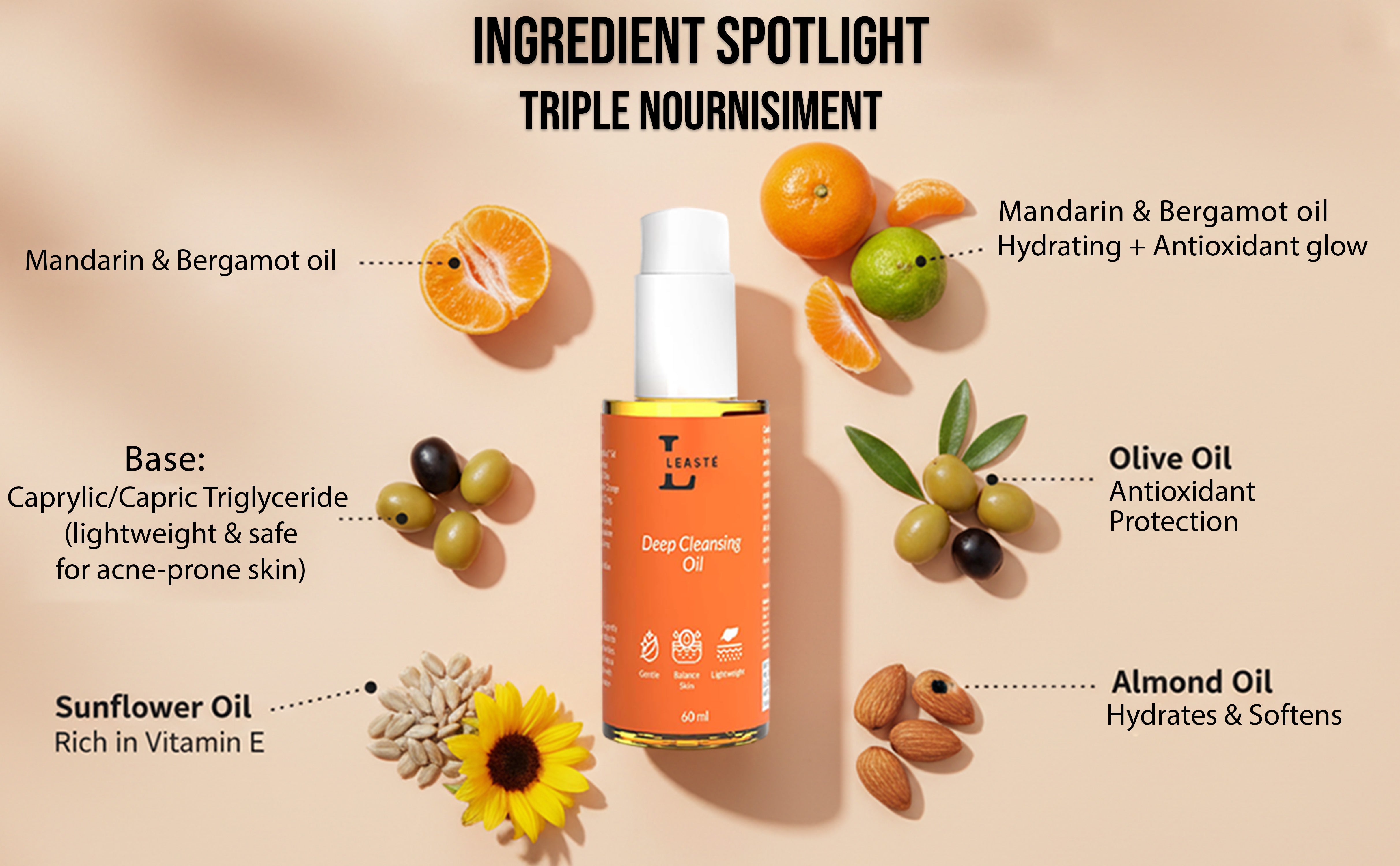
Oily skin can feel like a never-ending battle. No matter how much you cleanse, blot, or powder, the shine comes back within hours. Your makeup slides off, your pores look enlarged, and breakouts seem to appear out of nowhere.
But here is the truth — oily skin is not a curse. It is actually one of the most misunderstood skin types. With the right routine and the right ingredients, oily skin can be balanced, clear, and genuinely healthy. And the good news is that people with oily skin tend to age more slowly than those with dry skin because of the natural moisture their skin produces.
In this complete guide we explain exactly why your skin is oily, the biggest mistakes oily skin types make, and how to build a routine that keeps shine under control all day long.
Why Is Your Skin Oily? The Real Reason
Your skin produces oil called sebum through tiny glands beneath the skin surface called sebaceous glands. Sebum is actually essential - it protects your skin barrier, keeps skin moisturized naturally, and has antimicrobial properties that protect against bacteria.
The problem happens when these glands overproduce sebum. This leads to shiny skin, enlarged pores, and clogged pores that cause blackheads and breakouts.
Several factors trigger excess oil production:
Genetics is the biggest factor. If your parents had oily skin, you are likely to have it too. The size and activity of your sebaceous glands is largely determined by your genes.
Hormones play a major role. Androgens - male hormones present in both men and women - directly stimulate sebum production. This is why oily skin is most common during puberty, menstruation, pregnancy, and times of hormonal change.
Hot and humid weather stimulates sebaceous glands to produce more oil. This is why oily skin is especially common in India where the climate is warm and humid for most of the year.
Over-cleansing and stripping the skin actually makes oily skin worse. When you strip your skin's natural oils with harsh cleansers, your skin overcompensates by producing even more oil. This is the most common mistake oily skin types make.
Diet high in refined sugar and processed foods can spike insulin levels and trigger excess oil production in some people.
Wrong skincare products - using heavy, comedogenic moisturizers and creams designed for dry skin will clog pores and worsen oiliness.
The Biggest Mistake Oily Skin Types Make
Over-cleansing. This is by far the most common and damaging mistake for oily skin.
Most people with oily skin think if they wash their face more often - 3, 4, even 5 times a day - they can control the shine. The opposite is true. Every time you cleanse, you strip your skin's natural oils. Your skin detects this and sends a signal to produce more sebum to compensate. The result is even oilier skin by the end of the day.
The solution is to cleanse only twice daily - morning and night - with a gentle, balanced cleanser. This breaks the over-cleansing cycle and allows your skin to regulate its oil production naturally. Most people see a significant improvement in oiliness within 2 to 3 weeks of stopping over-cleansing.
The second biggest mistake is skipping moisturizer. Many oily skin types avoid moisturizer thinking it will make their skin oilier. This is wrong. Dehydrated skin - skin that lacks water actually produces more oil to compensate. Using a lightweight oil-free moisturizer keeps skin hydrated without adding shine and actually reduces oil production over time.
Best Ingredients for Oily Skin
Niacinamide is the number one ingredient for oily skin. At concentrations of 5% to 10% it visibly reduces sebum production, minimizes the appearance of enlarged pores, controls shine, reduces redness, and fades post-acne marks. It is gentle enough for daily use morning and night and works with all other skincare ingredients.
Salicylic Acid is a beta hydroxy acid that is oil-soluble - meaning it can penetrate through the oil in your pores and dissolve the buildup of dead skin cells and sebum that cause blackheads and breakouts. Use it in a cleanser or toner daily for clear, unclogged pores.
Clay - Kaolin and Bentonite clay absorb excess oil from the skin surface and deep within pores. Best used in a weekly face mask rather than daily to avoid over-drying.
Zinc has natural oil-controlling and anti-inflammatory properties. Found in many mattifying moisturizers and mineral sunscreens, zinc helps regulate sebum production and reduce shine throughout the day.
Hyaluronic Acid is essential even for oily skin. It provides water-based hydration without any oil, keeping skin balanced and preventing the dehydration that triggers excess oil production. Always choose a serum formula rather than a cream.
Retinol regulates sebum production, speeds up cell turnover to prevent clogged pores, and fades post-acne dark spots. Use it at night 2 to 3 times per week for long-term oil control and clearer skin.
AHA and BHA Exfoliants dissolve dead skin cells that contribute to clogged pores and dull skin. Salicylic acid is the best BHA for oily skin. Glycolic acid is a good AHA option for improving texture and brightness.
Green Tea Extract has powerful antioxidant and anti-inflammatory properties and has been shown to reduce sebum production when applied topically. Look for it in toners and moisturizers for oily skin.
Ingredients to Avoid for Oily Skin
Heavy oils like coconut oil, olive oil, and mineral oil clog pores and worsen oiliness. Avoid any products containing these as main ingredients.
Rich butters like shea butter and cocoa butter are too heavy for oily skin and will block pores.
Alcohol-based toners strip the skin barrier and trigger rebound oiliness. Avoid toners that smell strongly of alcohol.
Heavy cream moisturizers designed for dry skin will sit on top of oily skin, clog pores, and worsen shine. Always choose gel or fluid formulas.
Comedogenic ingredients - always check that products are labeled non-comedogenic meaning they are specifically formulated not to clog pores.
Complete Morning Routine for Oily Skin
Step 1 - Gentle foaming or gel cleanser with salicylic acid. Cleanse for 60 seconds with lukewarm water. Avoid hot water which stimulates oil glands. Pat dry with a clean towel - never rub.
Step 2 - BHA toner with salicylic acid. Apply with hands or a cotton pad to remove any remaining impurities and prep skin for your serums. This step keeps pores clear throughout the day.
Step 3 - Niacinamide serum 5% to 10%. This is the most important step for oily skin. Apply a few drops all over the face and allow 1 minute to absorb. Niacinamide visibly reduces shine and pore appearance with consistent daily use.
Step 4 - Oil-free lightweight gel moisturizer. Never skip this step. Choose a gel formula with hyaluronic acid that provides water-based hydration with zero oil or heaviness.
Step 5 - Oil-free non-comedogenic SPF. This is non-negotiable. Choose a lightweight fluid or gel SPF specifically formulated for oily or acne-prone skin. Many modern SPFs for oily skin actually have a mattifying effect that controls shine throughout the day.
Step 6 - Mattifying primer if wearing makeup. A silicone-based mattifying primer creates a smooth shine-free base for makeup and extends how long your makeup stays in place.
Complete Night Routine for Oily Skin
Step 1 - Oil cleanser or micellar water. Even oily skin benefits from double cleansing at night. An oil cleanser effectively removes SPF and makeup without stripping the skin. Oil dissolves oil - it will not make your skin oilier.
Step 2 - Foaming or gel cleanser with salicylic acid. Follow with your regular cleanser to remove any remaining traces of the day from your skin.
Step 3 - Exfoliating toner with BHA or AHA. Use 3 to 4 nights per week only. On the nights you use retinol skip the exfoliating toner. Over-exfoliating damages the skin barrier and worsens oiliness.
Step 4 - Retinol serum 2 to 3 nights per week. Start with a low concentration and apply a pea-sized amount all over the face. On non-retinol nights use your niacinamide serum instead.
Step 5 - Clay mask once per week. After cleansing and before your serum, apply a kaolin or bentonite clay mask for 10 to 15 minutes. This deeply purifies pores and absorbs excess oil for clearer skin the next day.
Step 6 - Lightweight gel moisturizer. Even at night oily skin needs moisturizer. Choose a lightweight gel formula - never a heavy night cream - to maintain hydration without adding shine.
How to Control Shine Throughout the Day
Even with the perfect morning routine, oily skin may still get shiny by midday especially in India's warm climate. Here are the most effective ways to control shine throughout the day:
Blotting papers are the best on-the-go solution. Press gently onto shiny areas - do not rub - to absorb excess oil without disturbing makeup. Keep a pack in your bag at all times.
Mattifying setting powder applied lightly over makeup sets everything in place and absorbs oil throughout the day. Use a translucent powder with a fluffy brush for a natural finish.
Setting spray with mattifying properties extends the life of your makeup and controls shine. Spray from 20 to 30 centimeters away in an X and T motion after applying makeup.
Reapply SPF with a powder SPF. If you need to reapply sunscreen over makeup, powder SPF formulas are perfect for oily skin - they reapply protection without disturbing your makeup and add a matte finish.
Avoid touching your face. Your hands transfer oil and bacteria to your skin throughout the day. Touching your face stimulates oil glands and spreads bacteria that cause breakouts.
Stay hydrated. Drink 8 glasses of water daily. Dehydrated skin produces more oil to compensate. Proper internal hydration is one of the most underrated ways to control shine.
Weekly Treatments for Oily Skin
Once or twice per week add these targeted treatments to your routine for extra oil control and clearer skin:
Clay face mask - apply after cleansing and leave on for 10 to 15 minutes. Rinse off with lukewarm water and follow with your regular routine. This absorbs deep pore congestion and controls excess sebum.
Chemical exfoliation - use a salicylic acid or glycolic acid mask or treatment once per week for deeper pore cleansing and improved skin texture.
Overnight salicylic acid treatment - apply a thin layer of a 2% salicylic acid leave-on treatment to congested areas like the nose and chin before your moisturizer once or twice per week for deeper pore cleansing while you sleep.
Diet and Lifestyle Tips for Oily Skin
Reduce sugar and refined carbohydrates. High glycemic foods spike insulin which triggers androgen production and stimulates sebaceous glands. Reducing white bread, sugary drinks, and processed snacks can make a noticeable difference in oil production within 4 to 6 weeks.
Increase zinc in your diet. Zinc regulates sebum production from within. Foods rich in zinc include pumpkin seeds, chickpeas, lentils, nuts, and seafood.
Stay hydrated. Drink 8 glasses of water daily. Proper hydration keeps skin balanced and reduces the dehydration that triggers excess oil production.
Manage stress. Stress triggers cortisol which stimulates oil glands. Exercise, meditation, and adequate sleep all help reduce stress-related oiliness.
Change your pillowcase every 2 to 3 days. Oil, bacteria, and dead skin cells accumulate on pillowcases and transfer back to your skin every night - worsening oiliness and breakouts.
Exercise regularly but cleanse after. Exercise increases circulation and is great for skin overall but sweat can mix with oil and clog pores. Always cleanse your face after exercising.
Frequently Asked Questions About Oily Skin
Q: Should oily skin use moisturizer?
A: Absolutely yes. Skipping moisturizer makes oily skin worse. Dehydrated skin produces more oil to compensate. Choose a lightweight oil-free gel moisturizer that provides water-based hydration without adding shine.
Q: Can oily skin use face oils?
A: Some oils are actually beneficial for oily skin. Squalane is lightweight and non-comedogenic and helps balance oil production. Niacinamide-infused oils are also good options. Avoid heavy oils like coconut, olive, and mineral oil.
Q: Why is my skin oily in summer but dry in winter?
A: Heat and humidity stimulate oil glands in summer while cold dry air in winter strips moisture. You may need to adjust your routine seasonally - a lighter routine in summer and a slightly richer moisturizer in winter.
Q: How long does it take to control oily skin?
A: With the right routine most people see improvement in oiliness within 2 to 4 weeks. Stopping over-cleansing alone can make a significant difference within 2 weeks. Niacinamide shows visible results in 4 to 8 weeks of consistent daily use.
Q: Does diet really affect oily skin?
A: Yes for many people. High sugar and high glycemic foods are the biggest dietary triggers for excess oil production. Reducing these and increasing zinc-rich foods can make a noticeable difference in 4 to 6 weeks.
Q: Is oily skin more prone to aging?
A: Actually the opposite! Oily skin tends to age more slowly than dry skin because the natural oil provides a protective layer and keeps skin moisturized. People with oily skin often develop wrinkles later in life. The key is managing breakouts and shine while protecting the skin with SPF.
Final Thoughts: Oily Skin is Not Your Enemy
Oily skin is one of the most manageable skin types when you understand it correctly. The solution is not to strip all the oil away - it is to balance your skin so it does not overproduce oil in the first place.
Stop over-cleansing. Always moisturize. Use niacinamide daily. Wear oil-free SPF every morning. Be consistent and patient.
Within 4 to 6 weeks of the right routine your skin will be visibly less shiny, your pores will look smaller, and your breakouts will reduce significantly.
Oily skin with the right routine is healthy, glowing, and clear skin. You just need to work with it - not against it.
Ready to take control of your oily skin? Explore our collection of oil-control skincare products - lightweight, non-comedogenic formulas that balance and mattify without stripping your skin.


